
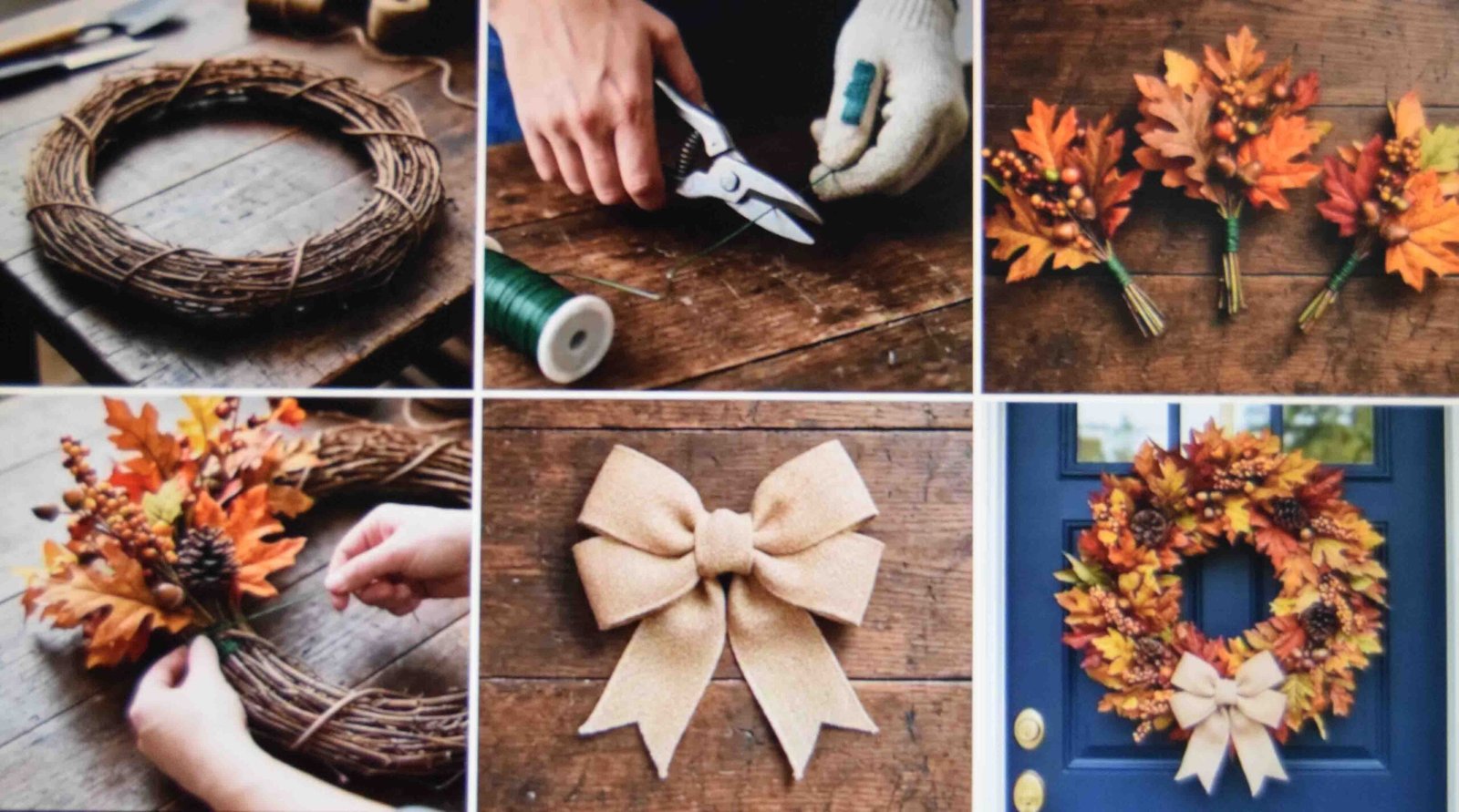




A frail, store-bought wreath rarely survives autumn squalls on an unsheltered entryway. If you want fall wreaths for front door diy easy results that actually stay put during thirty-mile-an-hour gusts, build them with mechanical wire tension instead of relying on weak adhesive spots. Hot glue turns brittle when freezing night temperatures arrive, dropping costly decorations onto the concrete. Sourcing raw materials yourself keeps total supply expenses between $28 and $35 in 2026, compared to retail pieces that run upward of $140. With simple hand tools and an afternoon on the porch, you can construct an exterior accent that holds its shape past Thanksgiving.
Essential Materials and What You Need
Every durable autumn project relies on a stable foundation that resists wind shear. Avoid flimsy wire rings or straw forms that degrade when wet autumn weather hits your porch. Natural vine bases provide built-in friction channels that clamp artificial foliage stems in place without melting adhesives. Sourcing your supplies in advance prevents halting work midway through assembly.
- 1 natural grapevine frame with an 18-inch inner core
- 1 spool of 22-gauge floral paddle wire in green enamel finish
- 1 roll of 2.5-inch wired burlap or dupioni ribbon measuring at least 5 yards
- 8 artificial autumn leaf picks including maple, oak, or beech
- 4 faux berry clusters such as rosehip or hypericum
- 3 dried mini white pumpkins or gourds with base wire picks
- 1 set of wire snips and spring shears
- 1 magnetic exterior hanger or door hook rated for 10 pounds
Select 22-Gauge Paddle Floral Wire for Structural Rigidity
Standard craft wire often snaps under wind strain, while heavy fencing wire remains impossible to cinch by hand. A 22-gauge paddle floral wire provides the precise balance of tensile strength and flexibility needed for exterior door arrangements. Thinner 26-gauge wire fails to hold bushy leaf stems in place during autumn storms, allowing individual elements to spin backward. Conversely, rigid 18-gauge wire resists tight bending and will dent your grapevine branches rather than binding around them. Keep the continuous wire wrapped on its green wooden paddle throughout assembly. That wooden core acts as a weighted tension handle, letting you pull tight loops without slicing into your palms.
Choose 2.5-Inch Wired Ribbon to Resist Wind Distortion
Unwired velvet or thin satin ribbons collapse the moment morning humidity touches your entryway. Selecting a 2.5-inch wired burlap or woven dupioni ribbon guarantees that your decorative loops maintain three-dimensional volume against coastal breezes and porch drafts. The thin copper or brass thread embedded along both fabric borders holds outward tension across every fold. Avoid narrow 1-inch ribbon varieties, which look visually lost across a wide entryway. When working with coarse burlap weaves, spray the fabric with a quick mist of clear acrylic sealer to stop edge threads from unraveling in wet weather.
Use Heavy-Duty Wire Cutters and Floral Shears
Household kitchen scissors will dull instantly if used to trim reinforced artificial stems. Heavy-duty 8-inch wire cutters feature hardened steel jaws designed to snap thick artificial branches without bending the hinge. Pair these with dedicated spring-action floral shears to slice through vine tendrils and fibrous stems cleanly. Standard paper scissors crush plastic botanical stems into ragged edges that catch dirt and refuse to seat properly inside your grapevine base. Keeping your cutting tools sharp reduces hand strain over an afternoon of shaping materials and ensures every wire termination remains flush against the frame.
Measure Your Entrance Before Buying Materials
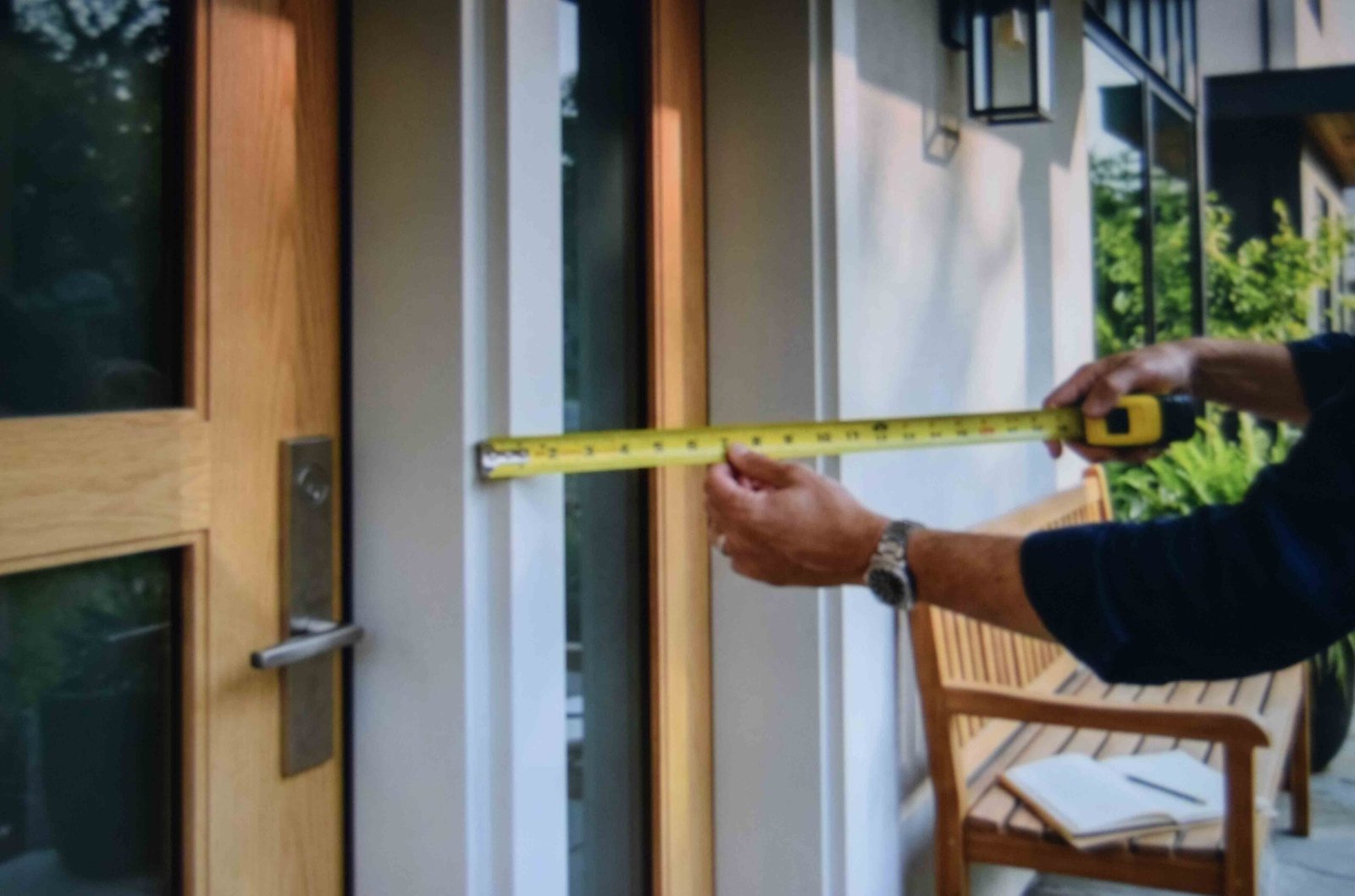
Most standard residential entry doors across the United States measure 36 inches across. When you hang an undersized 16-inch ring out there, the trim visually swallows it whole. Go past 30 inches, though, and the sprawling tips will strike your side jambs every single time the latch clicks shut.
You want a finished outer spread between 24 and 26 inches. That leaves roughly five inches of clear breathing room along both vertical edges of the frame.
Large fall wreaths for front door setups require an extra-wide 20-inch inner ring to spread out sprawling stems, but this standard project stays the safest call for normal entries.
Run your tape horizontally along the center panel before shopping. If your house has an exterior storm door with glass, your decor cannot stack higher than four inches thick or the glass panel will crush your foliage.
Inspect and Prune the Grapevine Base
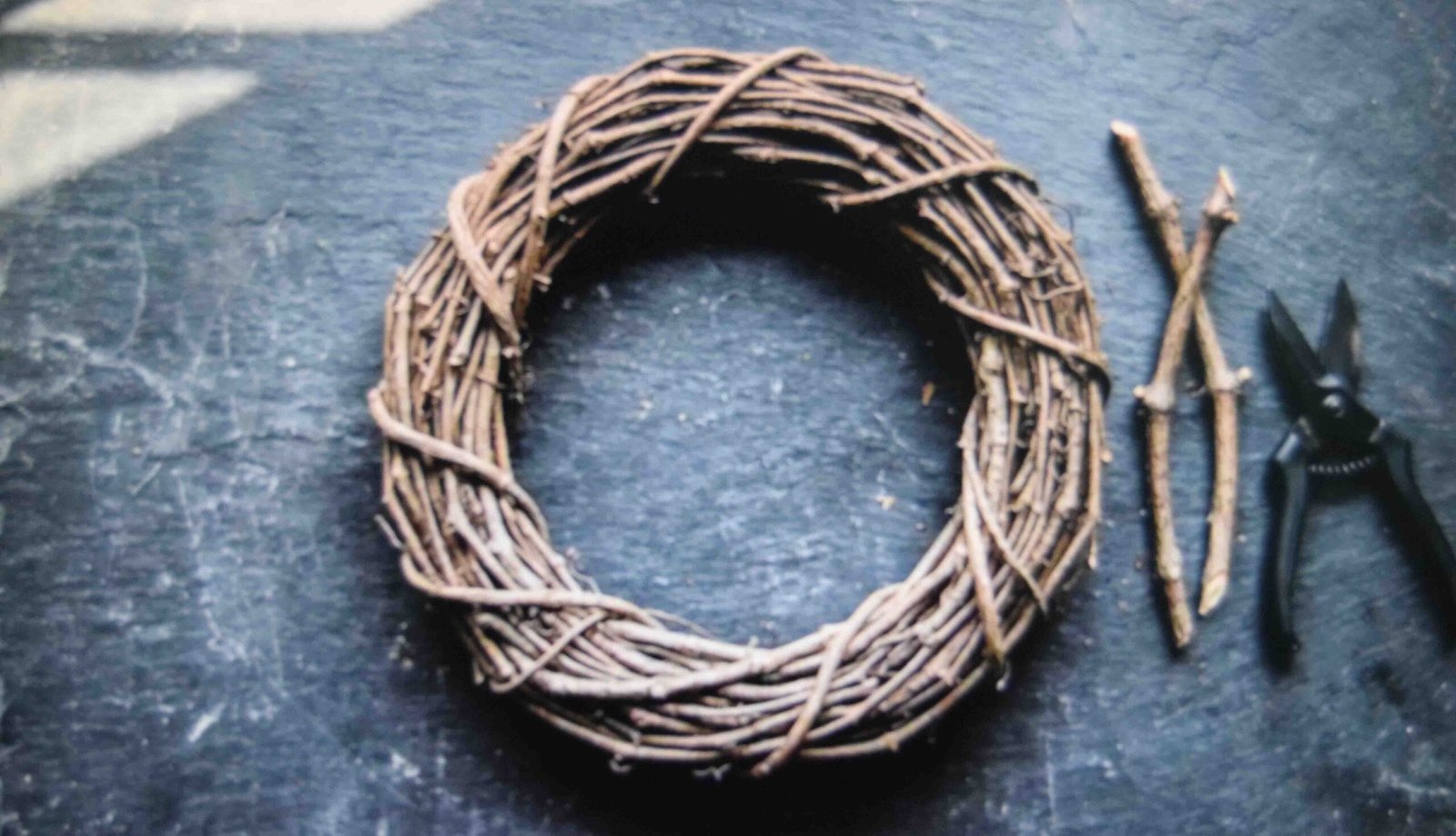
Carry that dried grapevine wreath out to your workbench or garage floor before doing anything else. Natural dried wood sheds dusty bits everywhere, and keeping that grit away from your indoor rugs saves vacuuming later.
Examine how the vines wrap around the circle. Locate the stiffest section where the twigs are packed closest together, and rotate that portion to the top where your hanging loop must grip.
Grab your floral shears and snip back the unruly twigs sticking out farther than two inches from the main circle.
Leave the remaining interior channels intact. Those crevices pinch your artificial flower stems firmly in place, which means you can assemble fall wreaths for front door diy easy displays without touching a messy glue gun.
Give the frame a firm squeeze with both hands. If it flexes like a stale cracker, grab a sturdier piece that will not warp when wet air arrives.
Form a Hidden Hanging Loop
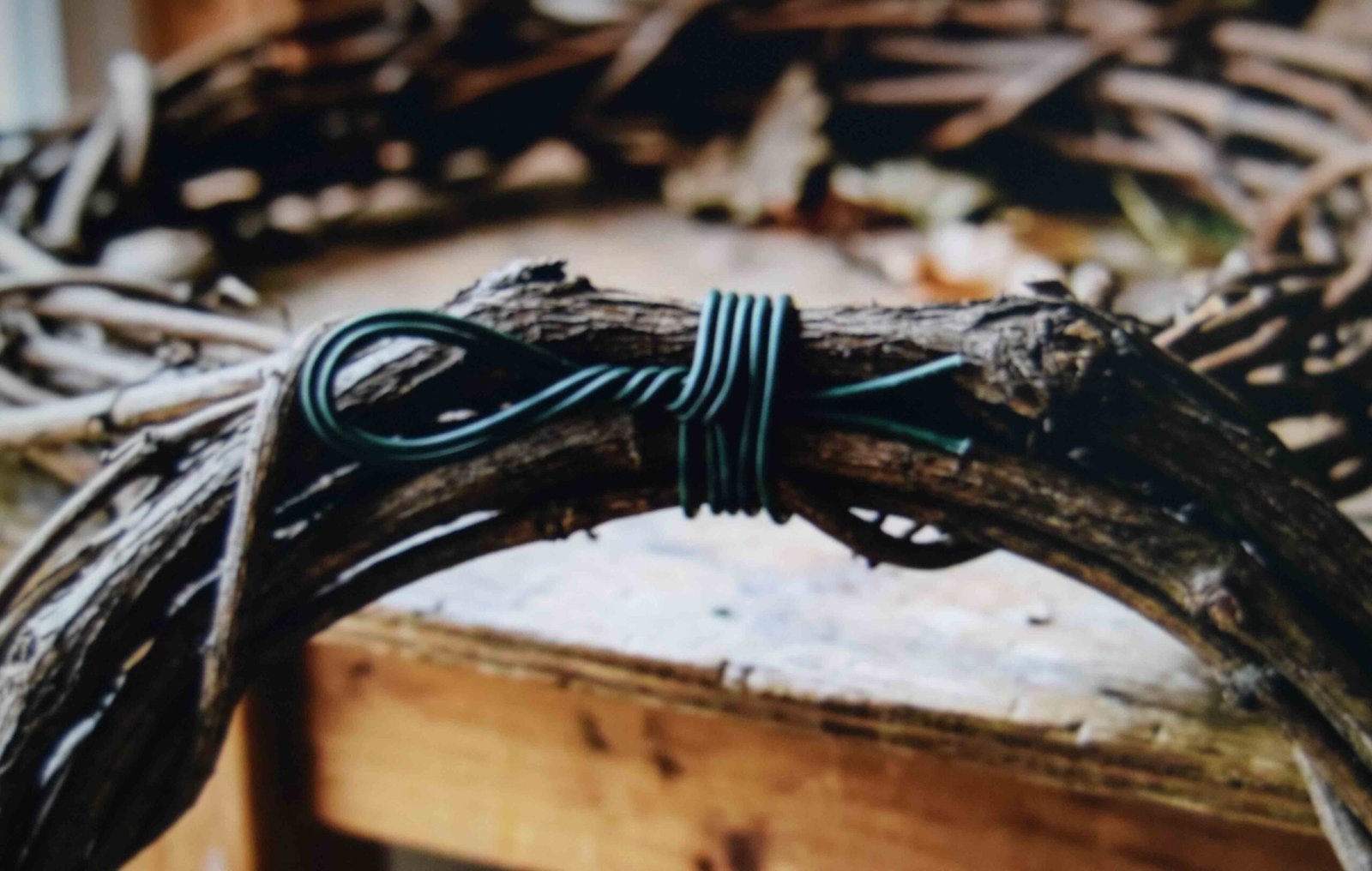
Snip off an eight-inch piece of your 22-gauge floral wire with side cutters. Double it over into a two-ply strand with a smooth rounded bend right at the fold.
Fish the two open wire tails directly through the backside of the grapevine, keeping them about two inches down from the very top rim. Loop both tails around the thickest structural branch you can find back there.
Grip the wire ends firmly with needle-nose pliers and spin them three full turns until the metal bites directly into the wood grain. Press those prickly cut ends flat against the interior groove so they never scratch your door enamel.
Pick the ring up by the wire loop and hold it against a wall. If it swings sideways or leans forward away from the trim, unwrap the wire and shift it an inch to the side until it hangs dead level.
Group Your Foliage into Layered Bunches

Poking individual plastic stems into bare vine is a recipe for a bald wreath. Single picks wobble around, twist upside down, and pull free during the first breezy rainstorm.
You will achieve far better density by wiring distinct five-inch botanical bunches right on your table first.
Set a broad maple spray flat on the bench. Lay a golden oak pick slightly over it, leaving two inches of clearance so both leaf shapes show clearly. Drop a berry spray right into the middle crease.
Cinch the bottom stems with your green paddle wire, wrapping it three times around the cluster with firm pressure.
Leave two inches of exposed stem right below your wire wraps. Assemble six identical bundles this way before moving to the frame.
Taking the time to prep your units is the real secret behind how to make fall wreaths for front door displays that look full instead of patchy.
Weave Faux Berries and Accent Sprays

Once your wide leaves are secured, it is time to work in secondary texture. Solid orange backgrounds blur together from the sidewalk, requiring deep burgundy or ochre berry picks to create crisp visual contrast.
Take the wire ends of your berry sprays and slide them straight between the twisted vines at an aggressive 45-degree angle.
Push each pick at least two inches deep into the compressed center core so the internal branches lock the stem mechanically without extra fasteners.
Angle the berry sprigs outward past the leaf perimeter. This technique pushes the outer diameter of your fall wreaths for door arrangements wider by two whole inches without filling up the center void.
Leave that middle circle open. When you crowd the middle of a wreath, the entire piece looks cramped and cheap from the curb.
Weatherproof and Balance the Finished Piece
Lift your finished wreath up and hold it against a bright window. Check for any bare spots where the wooden ring looks noticeably hollow or uneven.
Slide individual spare leaves into gaps where structural wire shows through the vine twigs.
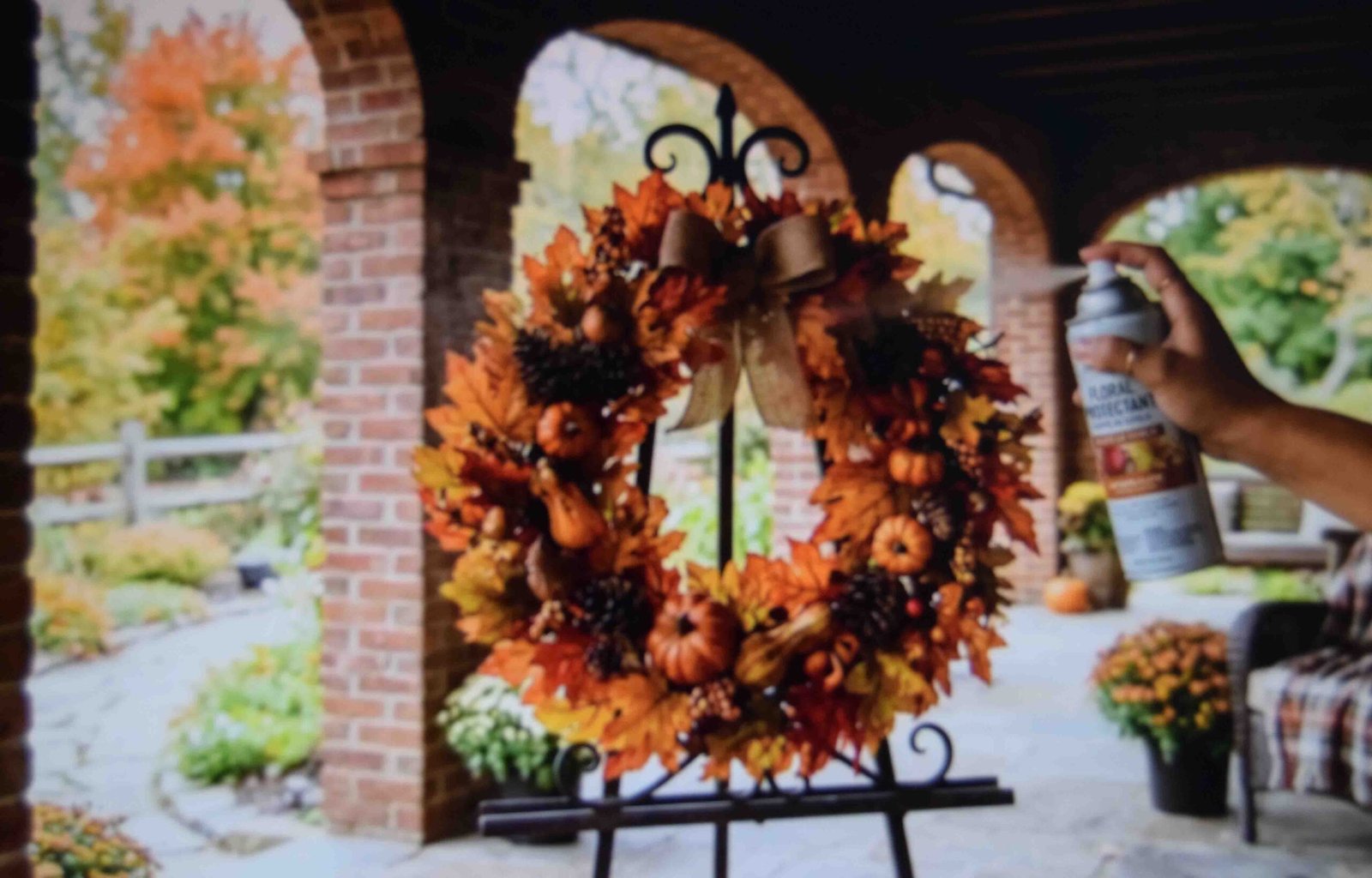
Take the wreath outside onto the open porch or driveway. Lay down some cardboard and spray the leaf surface with a fast coat of matte UV clear floral sealer.
Keep your spray can about twelve inches back so the sealant does not puddle into shiny wet pools on the fabric. This coat stops the sun from turning rich burnt orange fabric into bleached pink plastic over the next month.
Let the piece sit undisturbed for 45 minutes to cure before hanging it on your entrance.
How to Fix Common Construction Mistakes
The biggest headache crafters hit is a top-heavy or bottom-heavy wreath that swings upside down the second you let go of the loop. This usually happens when gourds are piled down low without any balance up high.
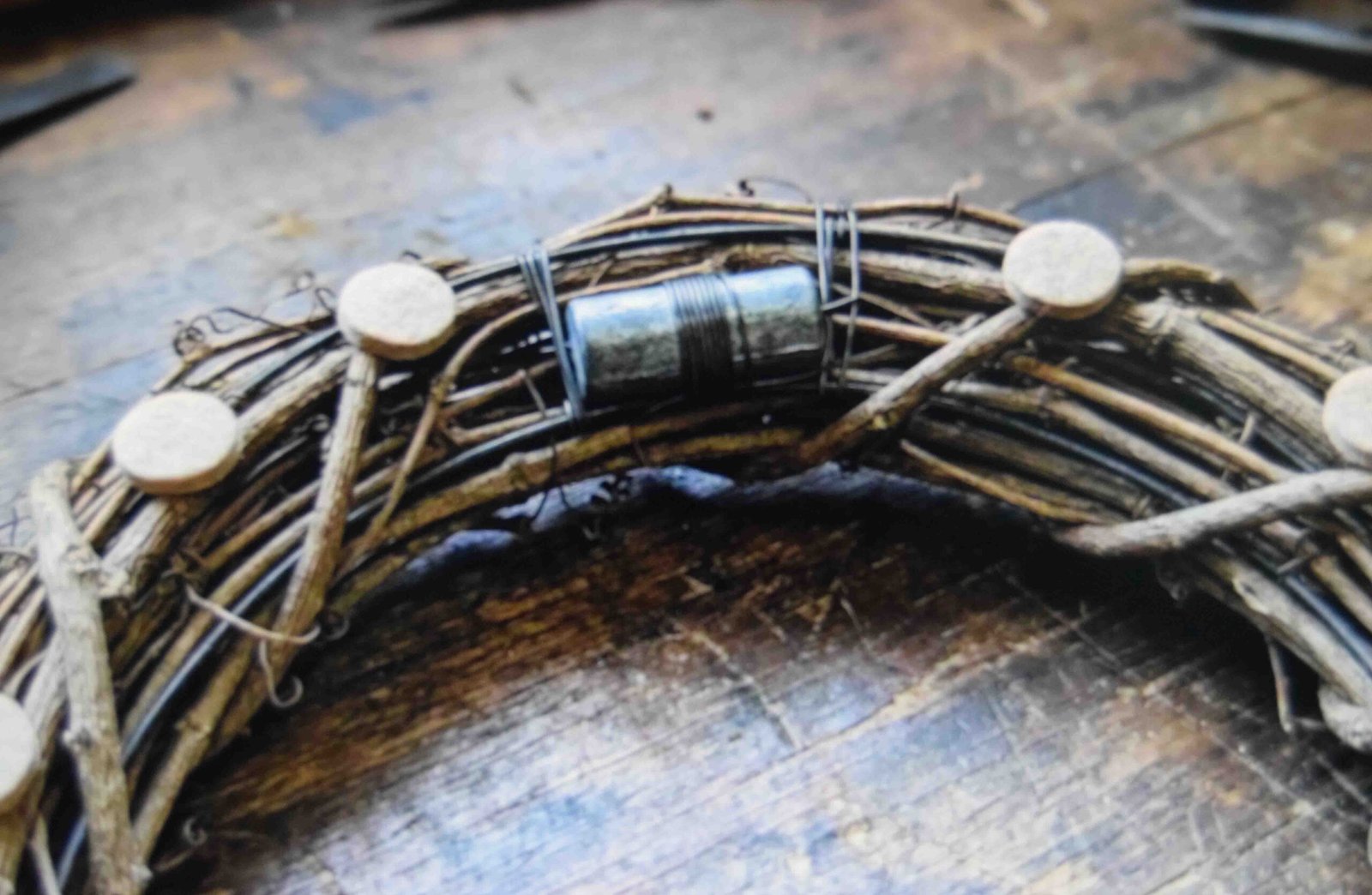
Do not tear off your foliage to fix it. Just grab a six-ounce fishing sinker or a scrap of plumbing solder and wire it to the upper rear edge of the vine to balance the center of gravity.
Wind suction can also pull loose stems free on unsheltered doors during stormy weather.
If a pick feels loose, pull it out, bend the bottom half-inch into a sharp hook, and shove it back inside the grapevine. That hooked metal tip will grab the internal wood grain and lock the stem in place.
Troubleshooting Porch Installation Issues
Decorating an exterior entryway brings up issues you never deal with inside a climate-controlled room. West-facing front doors trap intense heat between the storm door glass and the main panel, reaching 140°F by three in the afternoon. That trapped heat melts adhesive bonds, dropping heavy pieces straight to the sill. Mechanical wire loops bypass that problem entirely.
If you have a steel or fiberglass door, cheap metal brackets will scrape your jamb trim and ruin your weatherstripping. Switch to an exterior magnetic hook for solid steel doors, or grab a lever-locking suction cup for smooth glass panels. If drafts cause the frame to clatter, adhere three small felt furniture pads to the rear branches to cushion the wood against your paint.
Front Door Hardware and Fastening Stability
| Wreath Component | Fastening Method | Weather Resistance |
|---|---|---|
| Artificial Foliage Picks | 22-Gauge Floral Wire | High (Wind Safe) |
| Faux Foam Gourds | 18-Gauge Pick Anchor | High (Heat Stable) |
| Wired Fabric Ribbon | Mechanical Wire Twist | Medium (Rain Sensitive) |
| Dried Natural Elements | Direct Vine Weave | Low (Damp Sensitive) |
How to Make Wreaths for Front Door Transitions
When Thanksgiving wraps up, you do not have to discard your base frame. Snip off the wire ties holding your mini pumpkins and maple leaves, leaving your core vine foundation and hanging loop undisturbed.
This modular routine makes learning how to make wreaths for front door longevity practical and cost effective. Swap out the amber foliage for pine sprigs, cedar cuttings, and pinecones.
The exact same vine wrapping methods carry over smoothly when you begin planning front door winter wreath ideas, diy winter wreaths for front door projects, or traditional diy christmas wreaths for front door displays for December. A clean vine ring will easily survive three years of rotating seasonal greenery before the wood degrades.
Managing Decor Budgets and Retail Alternatives
Building your own porch decor takes roughly two hours and gives you exact control over depth, color, and fit. Pre-made designer wreaths for front door displays from specialty home stores easily hit between $85 and $140. Grabbing the raw materials yourself brings your total bill down to around $28 to $35 in 2026.
Commercial catalog picks like wayfair wreaths for front door setups are fine for quick shopping, but making your own lets you match the exact undertones of your home’s exterior trim and brick. Once you know how to anchor the stems with wire, assembling diy wreaths for front door curb appeal becomes second nature.
Frequently Asked Questions
Can I leave my finished autumn door piece up through heavy rain?
Direct rain saturates untreated burlap ribbon and softens natural grapevine over time. If your entrance lacks an overhang, choose synthetic foliage, skip delicate dried elements, and seal the leaves with an exterior-grade acrylic matte clear coat.
How much clearance do I need behind a glass storm door?
You need five inches of clearance between the entry door panel and the storm door glass. If your space is tighter, wire stems horizontally along the frame perimeter rather than building outward.
What is the best way to clean faux foliage after outdoor use?
Blow off porch dust using a handheld hair dryer set to cool at low speed. For road grime, wipe leaves with a microfiber cloth dampened with warm water and mild dish soap, then air dry completely before storing.
How do I store a handmade wreath without crushing the bow loops?
Store the piece inside a rigid plastic wreath tote, or hang it from an overhead attic rafter using an S-hook. Avoid stacking heavy cardboard boxes on top of your piece, as compressed ribbon wire creases permanently.
Order of Work Summary
Putting together fall wreaths for front door diy easy setups comes down to four clean stages:
First, check your door width and select an underlying core sized to hit a balanced 24- to 26-inch footprint. Building fall wreaths for front door diy easy accents requires matching this scale to your opening so foliage clears the jambs.
Second, wire up six separate foliage bunches on the table before touching the base frame.
Third, lash those leaf bundles down clockwise using a single unbroken run of paddle wire.
Fourth, anchor the heavy foam gourds with stiff gauge wire, fix the wired bow, and seal the finished piece with UV spray.