




You pulled it out at fifty minutes because the top looked done. Then you cut it and the middle collapsed into something closer to pudding.
Pumpkin streusel bread fails in two specific places. The crumb topping sinks into wet batter, and the loaf reads as baked long before the centre actually is.
Both are fixable, and neither needs a different recipe. They need a colder topping, a lower shelf, and a thermometer instead of a toothpick.
What makes pumpkin streusel bread harder than it looks
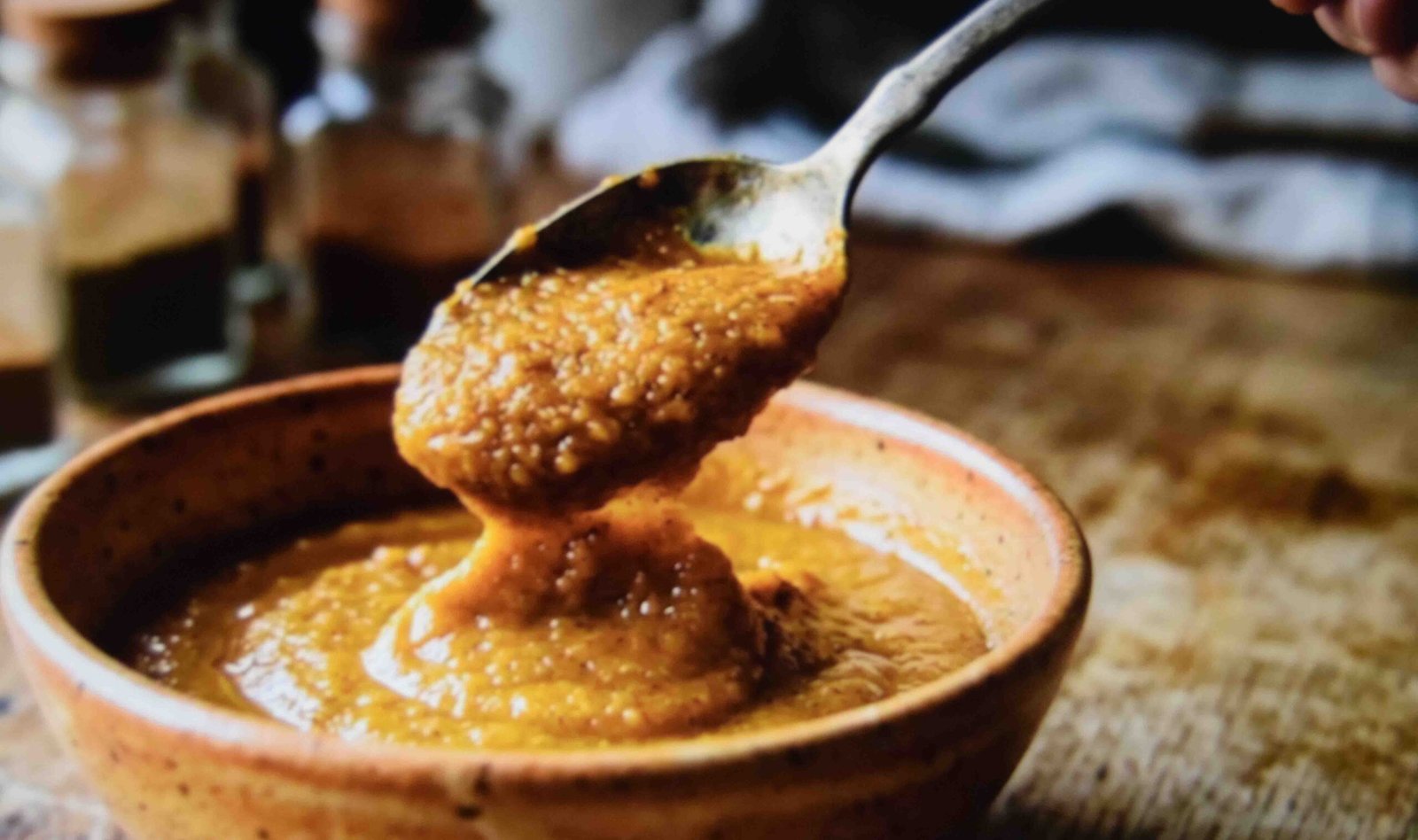
Pumpkin puree is roughly ninety percent water. That single fact explains almost every problem with this bake.
All that moisture means a longer bake, a wetter batter surface, and a topping with nothing solid to sit on. Compare it against a standard butter cake and you are working with a completely different set of physics.
People chasing something better than starbucks pumpkin bread usually add more pumpkin, which makes it worse rather than better.
The traditional approach behind a martha stewart pumpkin bread and most heritage recipes handles this by keeping the pumpkin quantity restrained and the spice generous. That is the correct instinct.
1. Get the pumpkin right before anything else
Buy pure pumpkin puree, not pie filling. Pie filling arrives pre-sweetened and pre-spiced, and using it will throw the sugar balance completely.
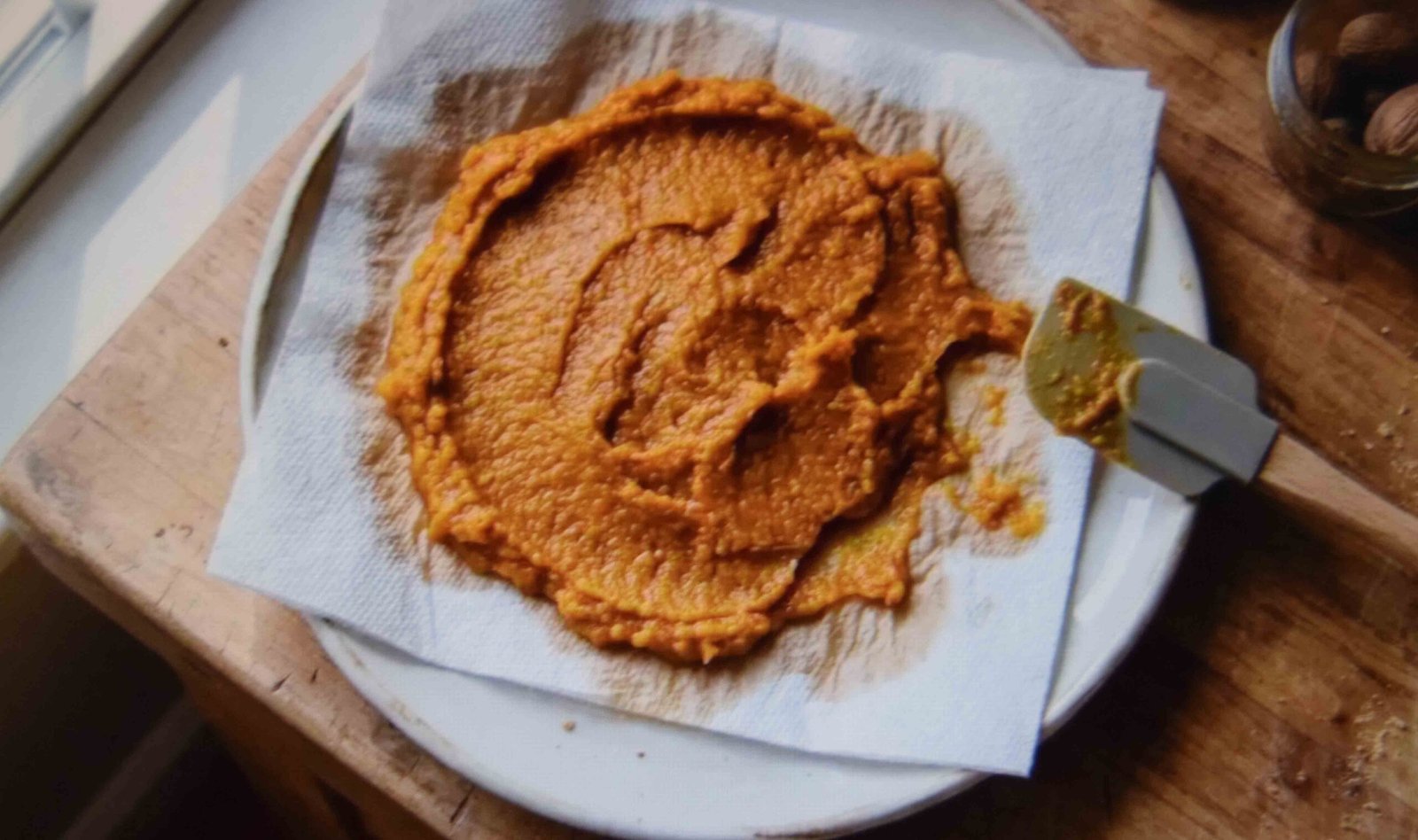
If you are using home-roasted pumpkin, drain it. Spread the puree on a plate lined with paper towel, leave it fifteen minutes, then scrape it off. Roasted squash carries far more water than canned.
One 15 ounce can holds slightly under 2 cups, which is more than this loaf needs. Measure rather than tipping the whole tin in.
The mistake here is grabbing the tin closest to the front of the shelf without reading the label. Pie filling and puree sit in near-identical cans.
2. Pumpkin bread with self rising flour, and the plain flour version
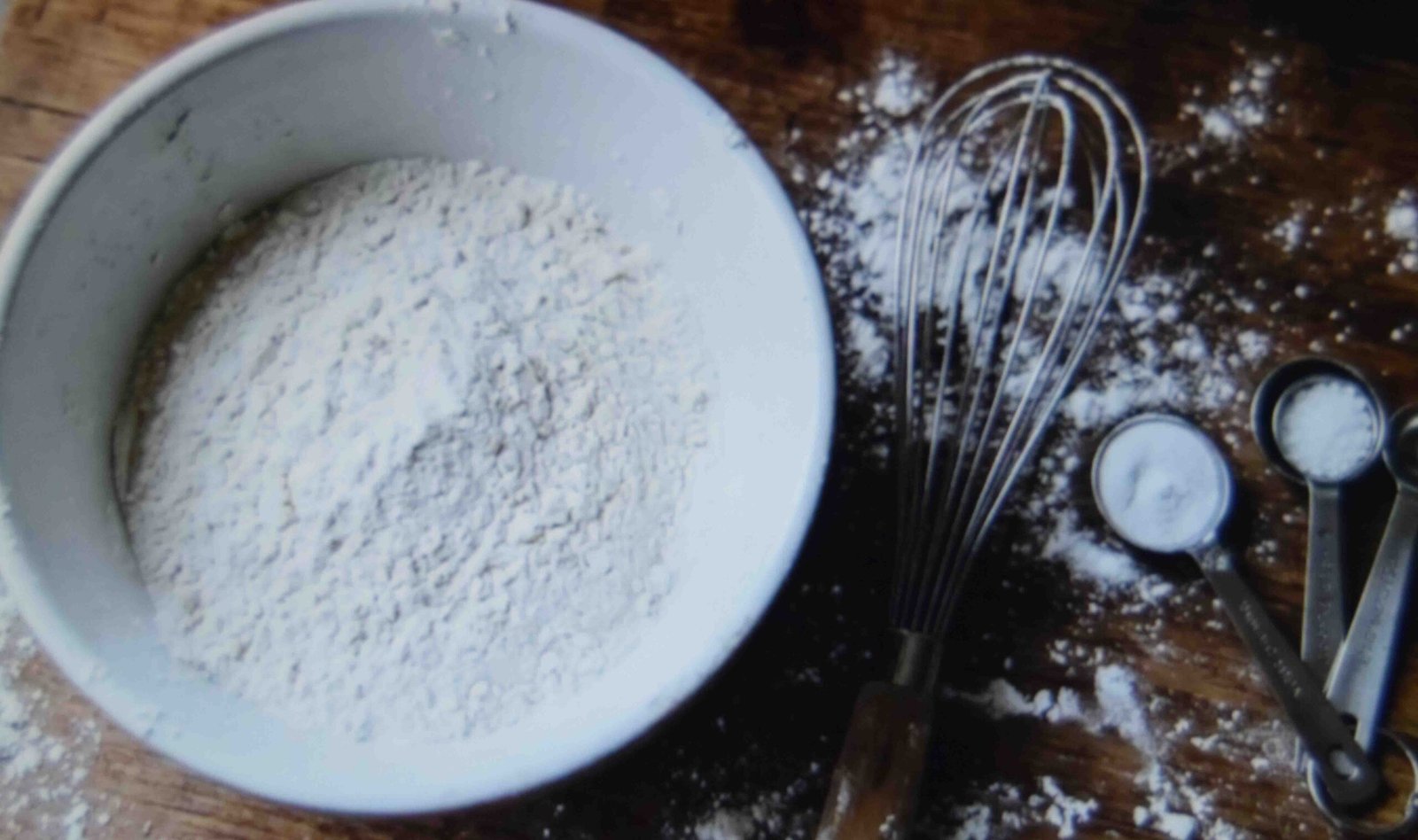
Self rising flour already contains baking powder and salt, so if you use it, leave out both. Roughly 2 cups covers a standard loaf.
Working from plain flour instead, you want 2 cups of all-purpose with 1 teaspoon of baking soda, half a teaspoon of baking powder and half a teaspoon of salt.
Baking soda matters more than powder in this recipe because pumpkin is acidic and the soda reacts with it directly.
Where self rising falls down is storage. The leavening loses power over months, so a bag sitting open since last autumn will give you a flat loaf. Check the date before you commit a whole bake to it.
3. Spice quantities that actually register
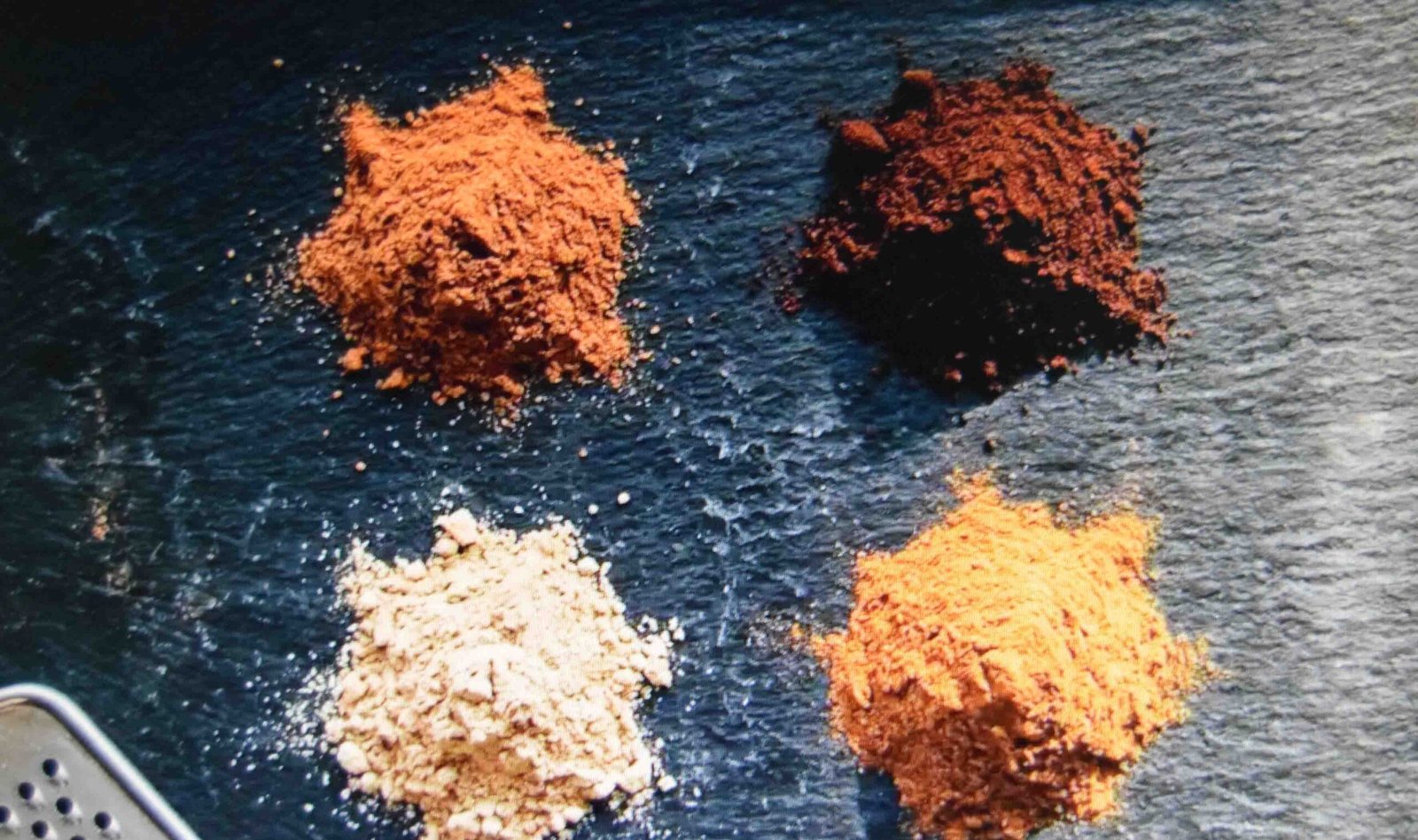
Warmth needs volume. Use 2 teaspoons of cinnamon, half a teaspoon of ginger, a quarter teaspoon of nutmeg and a quarter teaspoon of cloves.
Pre-mixed pumpkin pie spice works at 2 and a half teaspoons total, though the blend leans heavily on cinnamon and you lose the depth the other three provide.
Ground spices fade. A jar of nutmeg opened three years ago contributes almost nothing, and this is where a loaf ends up tasting flat despite following every measurement correctly.
Rub a pinch between your fingers and smell it. No smell means no flavour.
4. The pumpkin bread streusel topping, made cold
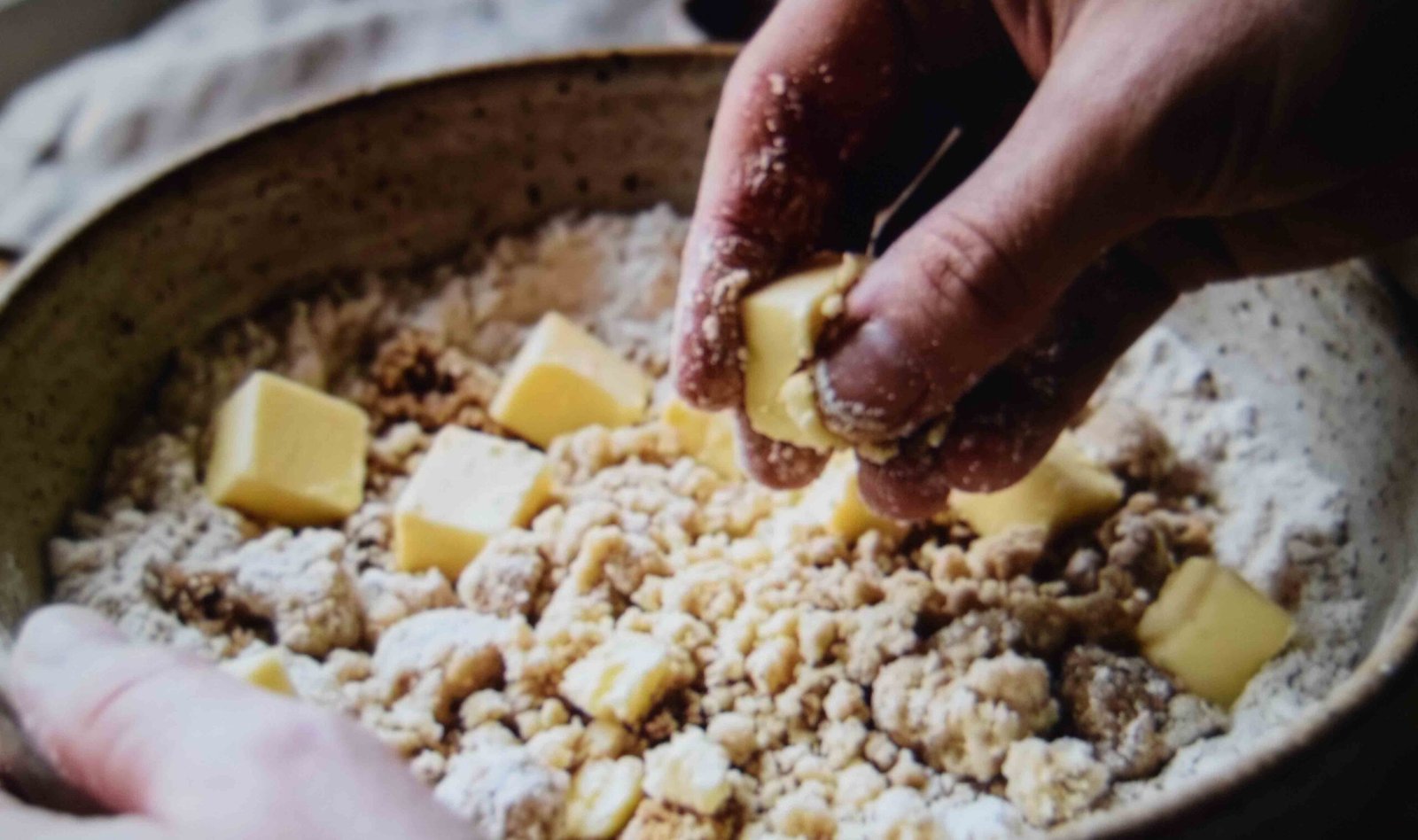
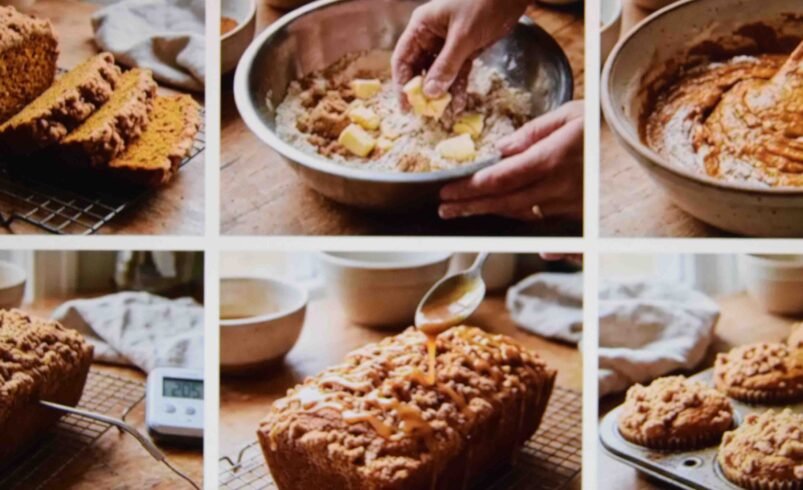
Cold butter is the whole secret. Combine half a cup of flour, a third of a cup of brown sugar, half a teaspoon of cinnamon and 4 tablespoons of butter straight from the fridge, cut into cubes.
Work it with your fingertips until you have pea-sized clumps. Stop there. Keep working it and the butter warms, the mixture turns to paste, and paste sinks.
Then chill the whole bowl for fifteen minutes before it goes anywhere near the batter.
Warm streusel is why toppings disappear into the loaf. It softens on contact and slides down through the batter as the crumb rises around it, and by then there is no rescuing it.
Add 2 tablespoons of chopped pecans or almonds if you want crunch that survives storage.
5. Mixing method, and the moment to stop
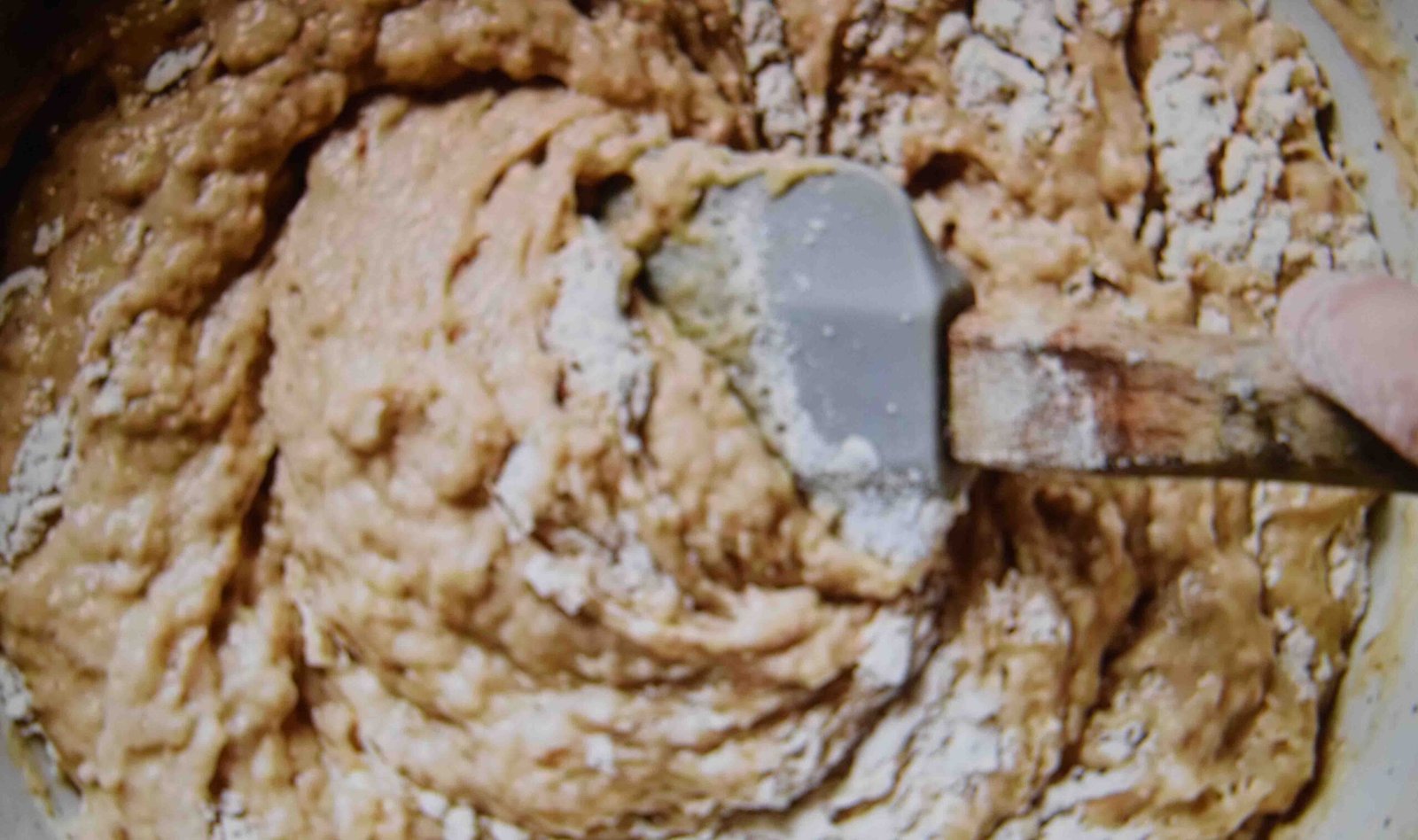
Whisk the dry ingredients in one bowl. Whisk the wet in another. Then combine them in as few strokes as possible.
Wet means 2 large eggs, three quarters of a cup of oil or melted butter, 1 cup of pumpkin puree, three quarters of a cup of granulated sugar and a quarter cup of brown sugar.
Fold with a spatula, not a mixer, and stop while streaks of flour are still visible. They vanish in the oven.
Overmixing develops gluten, and gluten in a quick bread gives you a chewy, tunnelled crumb rather than a tender one.
The whole assembly takes under 30 minutes if your ingredients are already out on the counter.
6. Pan choice changes the bake completely
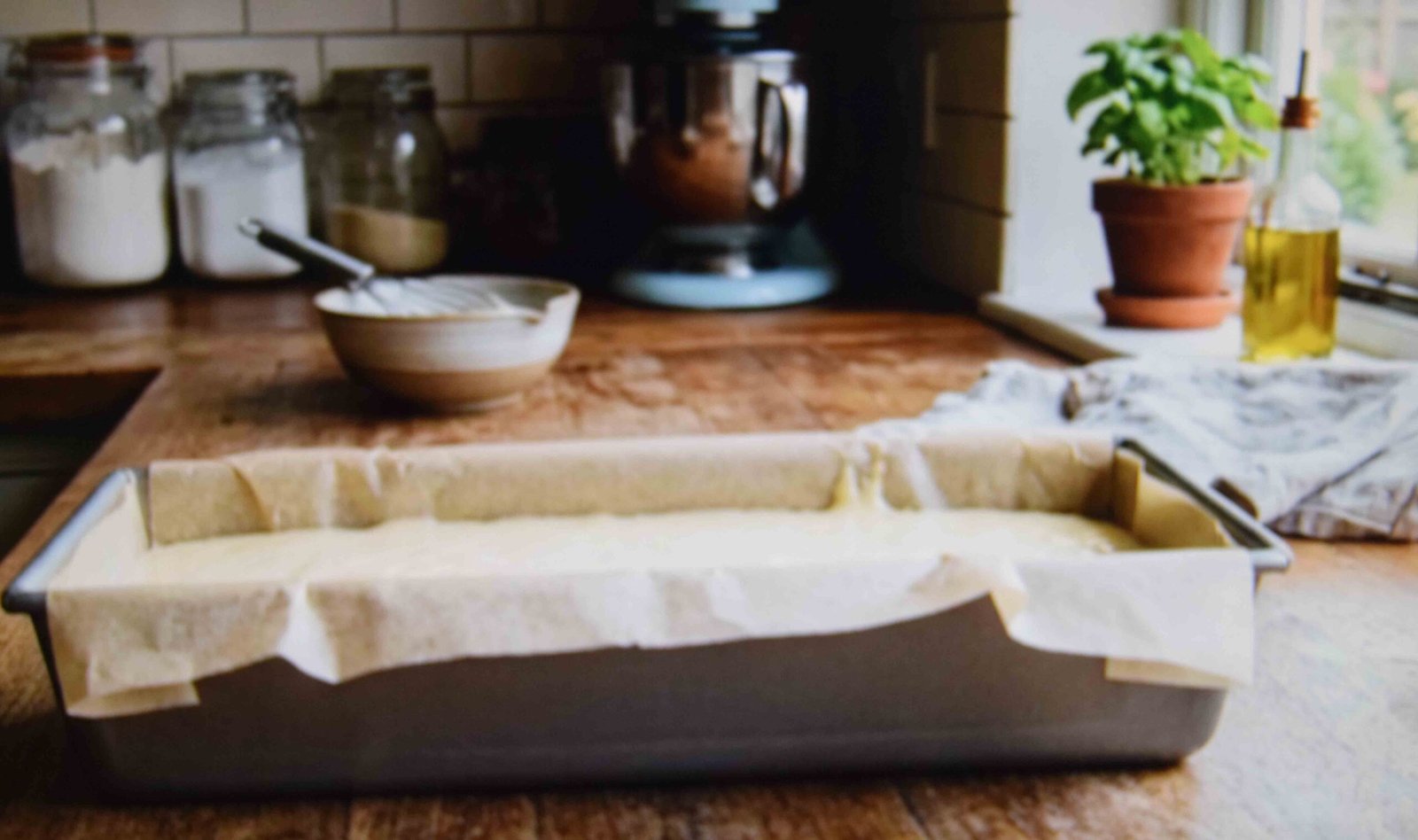
A 9 by 5 inch loaf tin is the standard here. An 8 by 4 will work but the batter sits deeper, so add roughly ten minutes and watch the centre carefully.
Grease the tin, then line it with a parchment sling running the long way with an overhang on both sides. That sling is how you lift a warm loaf out without breaking it.
Dark metal tins bake faster and darker than light ones. If yours is dark, drop the oven by 25°F.
Glass is the one to avoid. It heats slowly, holds that heat, and gives you overdone edges around an underdone middle.
7. Oven temperature and shelf position
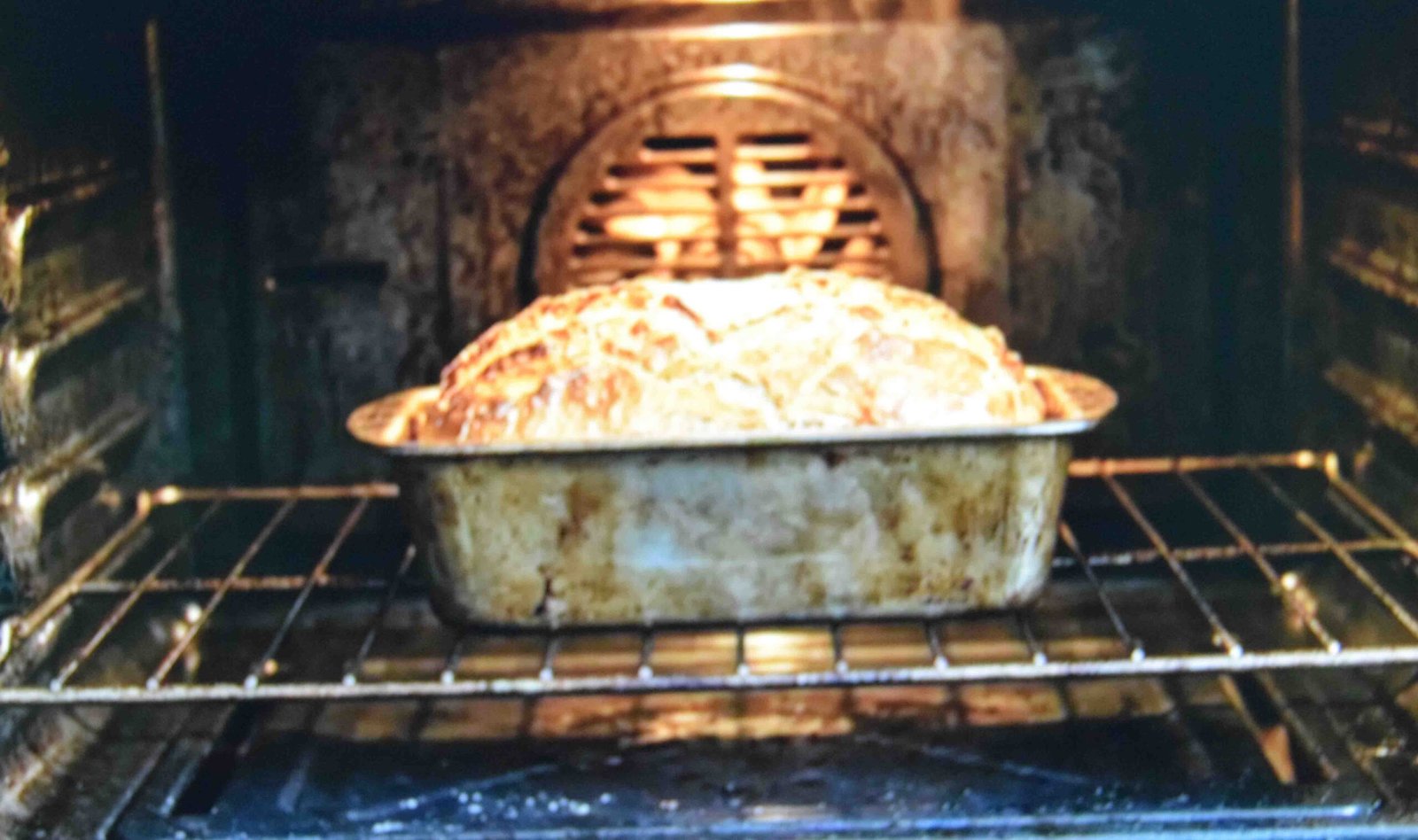
Bake at 350°F on the lower third shelf. That position puts more heat under the loaf, which is exactly where a wet batter needs it.
Preheat properly. Twenty minutes minimum, and longer if your oven is old, because a thermostat clicking off does not mean the walls have come up to temperature.
Middle shelf browns the streusel long before the centre sets. You then face a choice between a pale interior and a burnt top.
If the topping darkens too fast anyway, tent loosely with foil at around the forty minute mark and leave it there for the rest of the bake.
8. Timing, and the only doneness test worth trusting
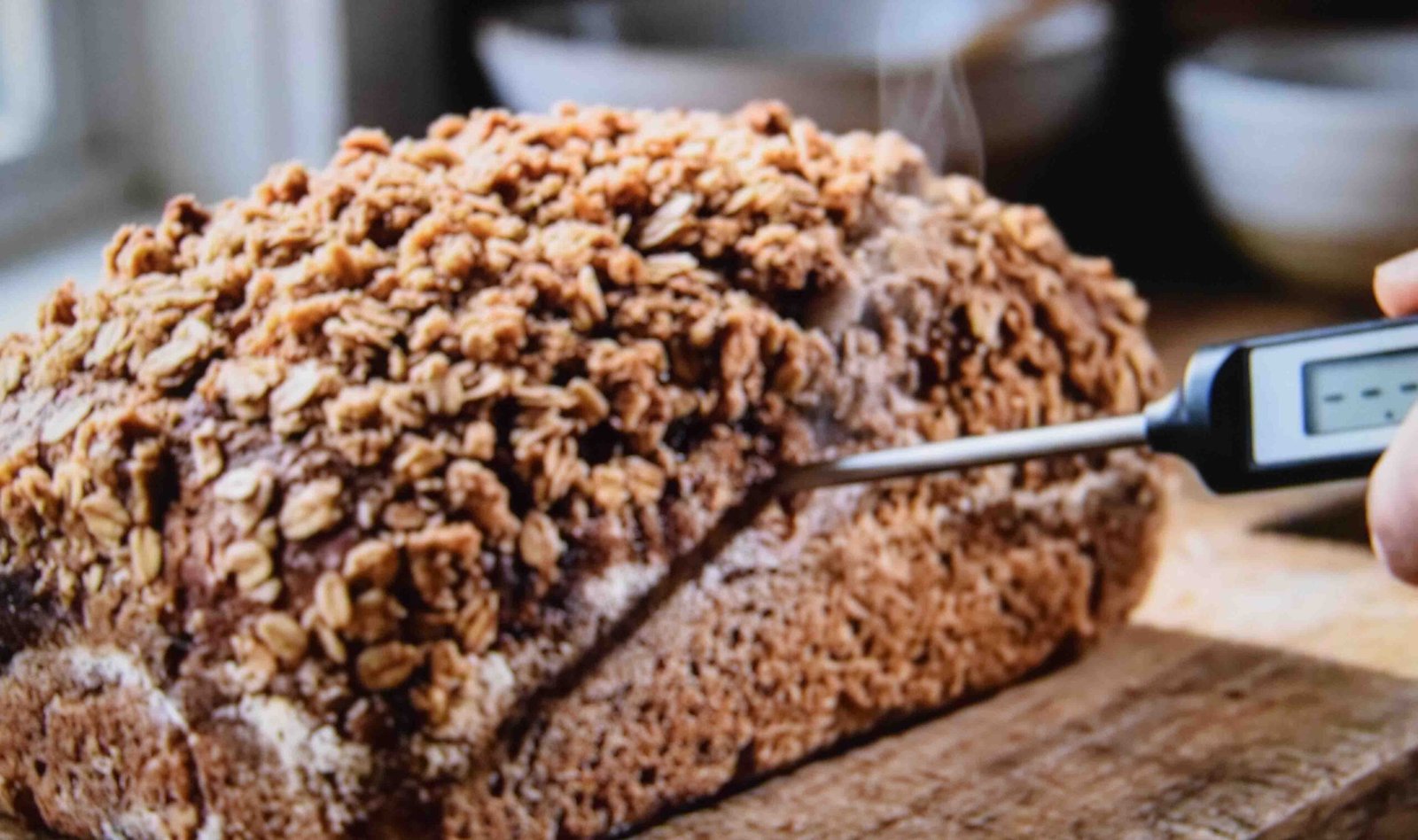
Expect 60 to 70 minutes at 350°F. Start checking at 55.
A toothpick lies with this loaf. Pumpkin is moist enough that a clean pick can come out of an underbaked centre, and a crumb topping means you cannot read the surface either.
Use a thermometer instead. The middle should hit 200 to 205°F. That is the number, and it removes all guesswork.
Push the probe in through the side rather than the top so you do not wreck the streusel making a hole.
The common error is trusting the clock over the thermometer because the top looks right at fifty minutes. It usually is not.
9. Cooling, which is not optional
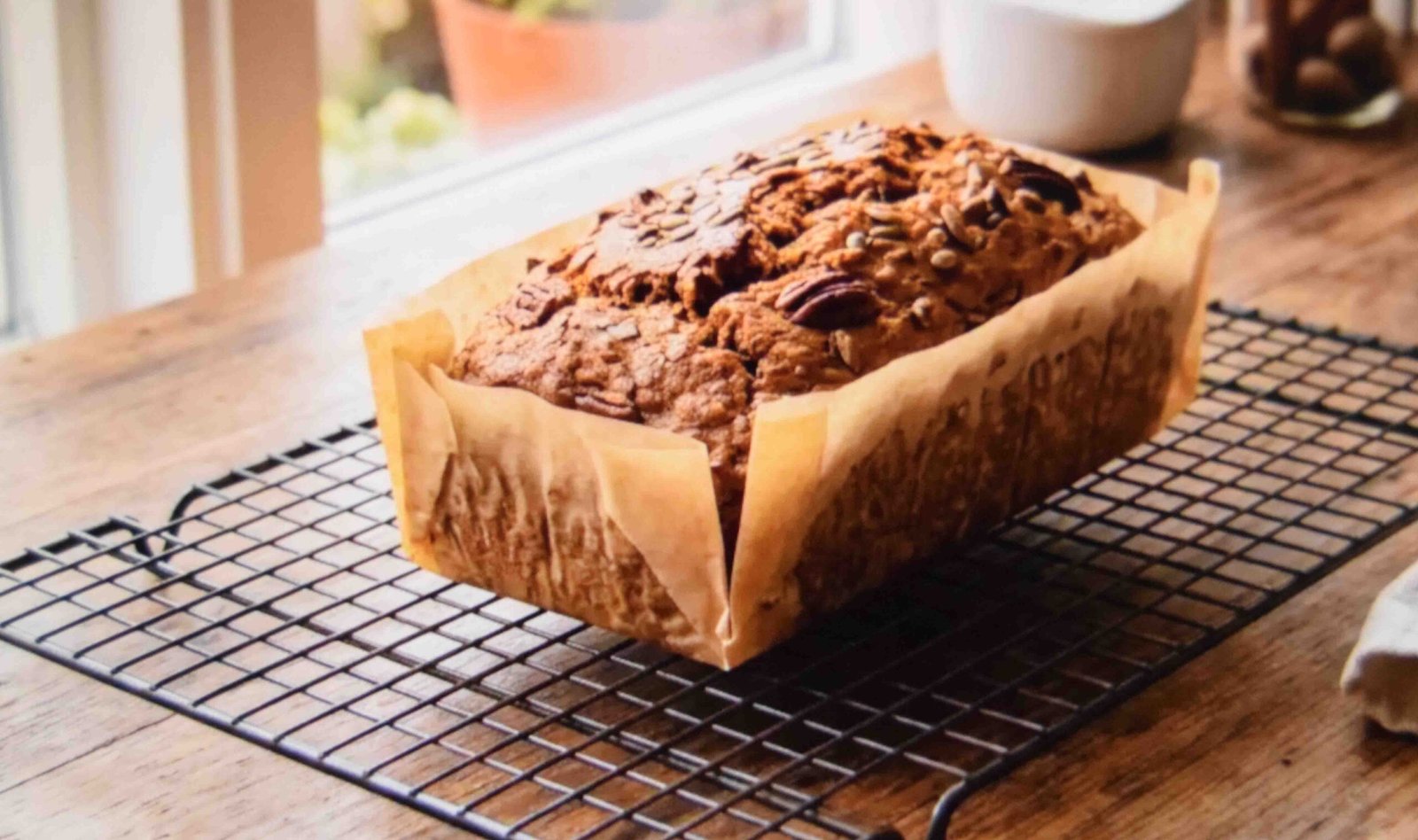
Leave the pumpkin streusel bread in the tin for exactly fifteen minutes. Any less and it collapses under its own weight when you lift it.
Then use the parchment sling to move it onto a wire rack, and let it cool completely before slicing.
Cutting into a hot quick bread is the single most common way people ruin a loaf that baked perfectly. The crumb is still setting, and a knife through it compresses everything into a dense line.
Never cool it on a plate or a board. Trapped steam softens the underside within minutes and you lose the base entirely.
Give it two hours if you can manage the wait.
10. Pumpkin bread with streusel topping and maple glaze
Glaze goes on completely cooled bread. Warm loaf plus glaze means the glaze melts straight through and pools around the base.
Whisk 1 cup of powdered sugar with 2 tablespoons of pure maple syrup and 1 to 2 teaspoons of milk. Add the milk half a teaspoon at a time until it ribbons off the whisk.
Too thin and it runs off the streusel and disappears. Too thick and it sits in a solid sheet that hides the crumb texture you just worked for.
Drizzle in lines rather than pouring it over the whole surface, so the topping stays visible underneath.
Skip the glaze entirely if you are freezing the loaf. It goes sticky and cloudy on thawing.
Pumpkin chocolate chip streusel bread, and other ways to change it
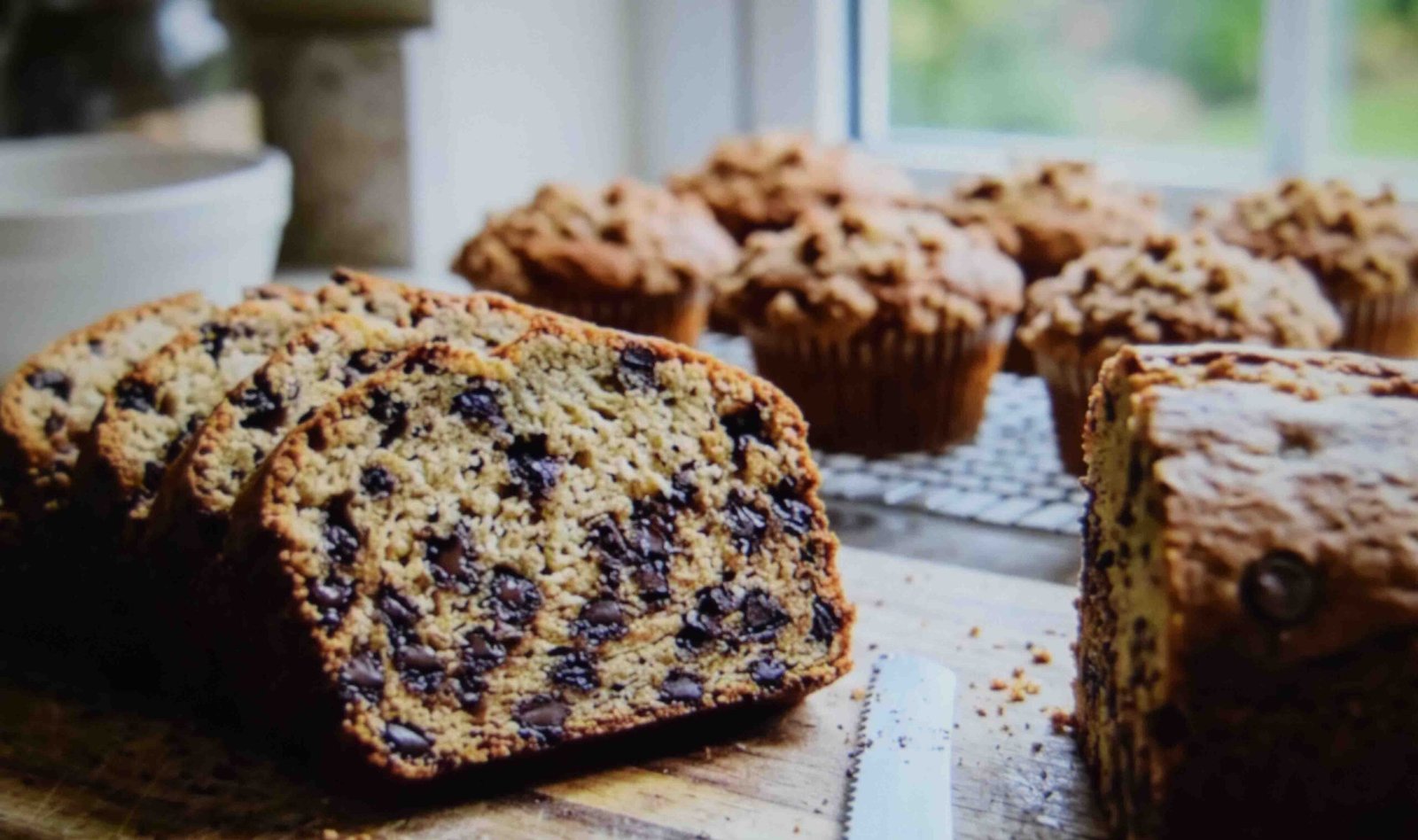
Fold in three quarters of a cup of chocolate chips, tossed in a tablespoon of the measured flour first so they do not all settle on the bottom.
For pumpkin muffins with streusel, divide the same batter into a 12 cup tin, fill each to two thirds, and bake 20 to 25 minutes at 375°F. The higher heat gives you a domed top in the shorter time.
Want pumpkin coffee cake with streusel instead? Use a 9 inch square pan, spread half the batter, add half the crumb, then repeat so there is a streusel layer running through the middle.
For pumpkin bread without sugar, mashed banana or unsweetened applesauce replaces some of the sweetener, though the loaf browns less and the crumb turns denser. That trade is real and worth knowing before you commit.
Storing it so day three is still worth eating
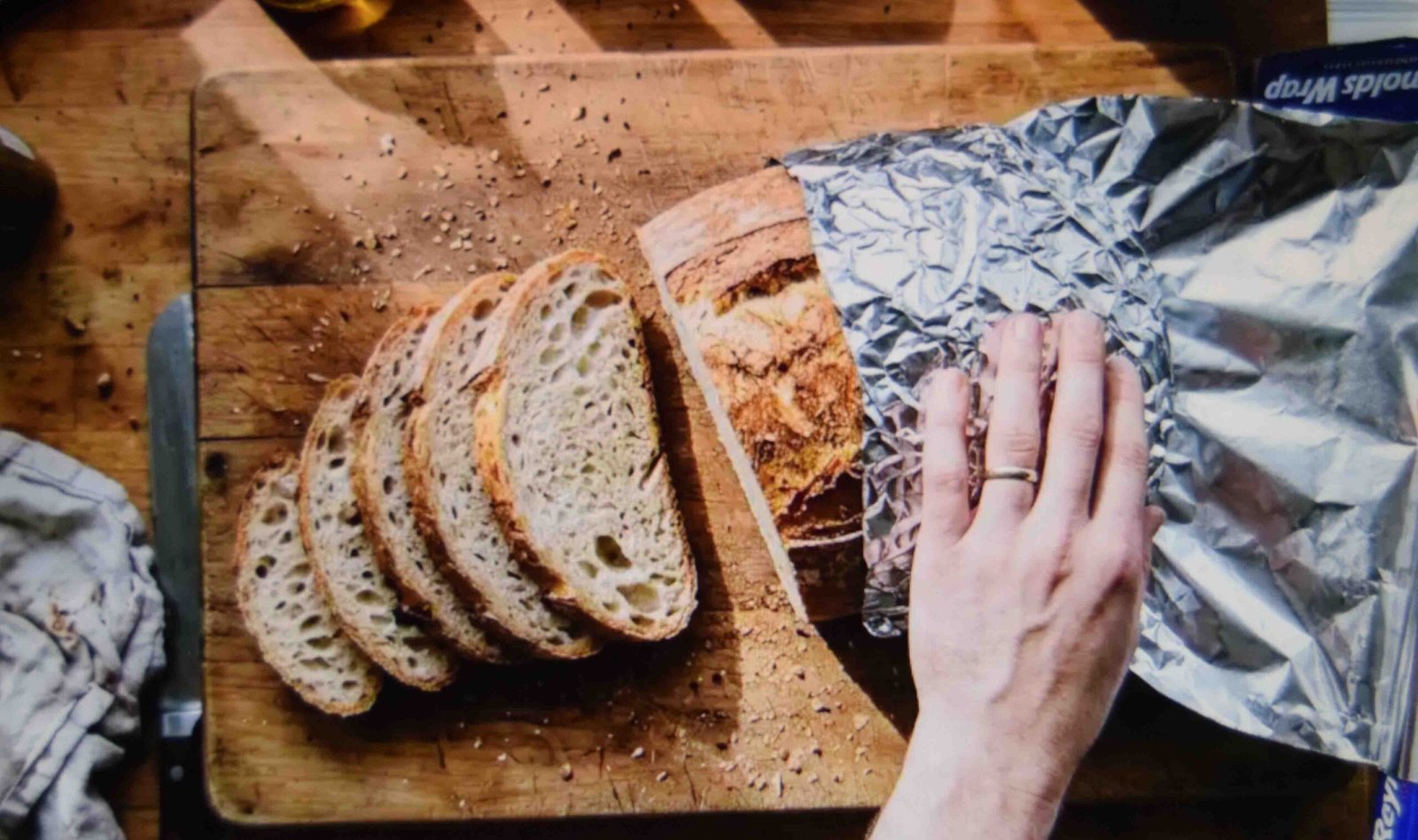
Cool completely, then wrap in foil rather than plastic. Plastic traps moisture against the streusel and turns it to mush overnight.
Room temperature keeps it three days. The refrigerator dries quick breads out faster than a counter does, so skip it unless you have glazed the loaf.
For freezing, wrap tightly and store up to three months. Thaw at room temperature still wrapped, which lets the condensation form on the foil instead of on the crumb.
Refresh a slice in a 300°F oven for five minutes and the topping crisps up again.
FAQ
Can I make the batter ahead and bake it later? Not with this one. Baking soda starts reacting with the pumpkin the moment they meet, so a batter left overnight bakes flat. Make the streusel ahead instead, since it keeps in the fridge for a week and only improves for being cold.
What if I only have canned pumpkin pie filling? You can work around it. Cut the granulated sugar by roughly half, leave out the spices entirely, and taste the batter before it goes in the tin. The result will be sweeter than intended, but it is edible.
Why did my loaf crack down the middle? That crack is normal and desirable in a quick bread. The outside sets while the centre is still rising, so it splits along the top. A loaf with no crack at all usually means the oven ran too cool.
Is pumpkin bread good for you? It is cake in a loaf tin, and worth thinking of that way. Pumpkin does bring vitamin A and fibre along with it, but the sugar and fat content puts this in the treat category rather than the breakfast one.
What is not worth buying for this? A dedicated pumpkin bread tin or a specialist crumb topping mix. A standard loaf pan and four pantry ingredients do the same job for a fraction of the cost.
Bake it once, then adjust for your oven
Every oven runs differently, so treat the first loaf as calibration. Note the exact minute your streusel hit the colour you wanted, and note when the centre reached 200°F.
Those two numbers are worth more than any recipe, and they carry across to most simple pumpkin bread recipes you make afterwards.
The version of pumpkin streusel bread people remember is not the sweetest one. It is the one where the topping still crunches and the crumb underneath stays damp, and that comes down to temperature control rather than technique.
Recipes on this site are for general information. Check labels for allergens including wheat, eggs, dairy and tree nuts, and adapt or omit ingredients to suit anyone eating with you.